Woodwashing, Toning, and Faux Staining Wood with Paint
Not every beautiful piece of wood needs to be painted.
In fact, some of the most compelling furniture transformations preserve the grain entirely.
The character of the wood. The texture beneath your fingertips. The subtle variations that only nature can create.
Yet preserving wood does not mean leaving it unchanged.
Many furniture pieces contain wood tones that no longer suit modern interiors. Orange oak, red cherry, yellow pine, and heavily red mahogany can feel overwhelming, even when the furniture itself is beautifully crafted.
Fortunately, there is a middle ground between leaving wood untouched and covering it completely with paint.
Woodwashing, toning, glazing, and faux staining allow you to alter the color and character of wood while preserving the beauty of its grain.
These techniques offer something traditional stains often cannot:
Complete control over color.
Rather than accepting the wood exactly as it is, you can gently guide it toward the tone, mood, and atmosphere you want to create.
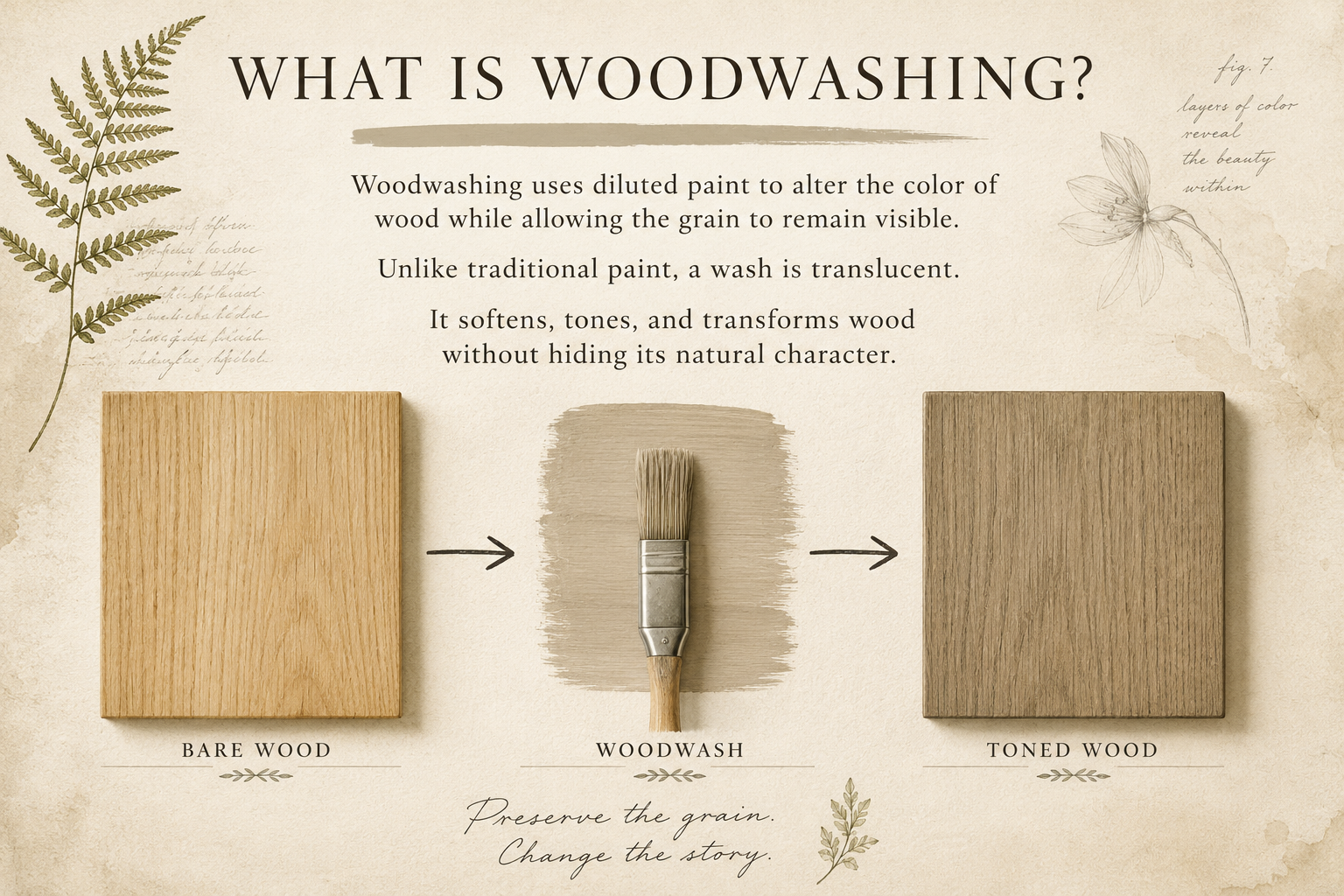
Woodwashing uses translucent color to shift the appearance of wood without hiding its natural texture and grain.
The Difference Between Painting and Toning
When most people think about paint, they imagine opaque coverage.
But paint can also be used translucently.
When diluted with water or incorporated into a glaze, paint behaves more like a stain or toner than a traditional coating.
Instead of hiding the wood, it allows the grain to remain visible beneath layers of color.
The result feels richer and more complex than either raw wood or painted wood alone.
Think of it less as covering the wood and more as filtering it.
The grain remains.
The texture remains.
The story remains.
Only the color changes.
What Is a Woodwash?
A woodwash is a heavily diluted paint mixture applied over bare wood.
The wash penetrates the surface and subtly shifts the color while allowing the grain pattern to remain visible.
Woodwashing can be used to:
Lighten wood
Add warmth
Reduce orange undertones
Neutralize redness
Create weathered finishes
Mimic aged timber
Produce custom stain effects
Unlike traditional stain, a paint wash offers unlimited color possibilities.
You are not restricted to commercially available stain colors.
You can create precisely the wood tone your project requires.
What Is a Toner?
A toner is a translucent layer of color designed to alter the appearance of existing wood.
Where a wash tends to soak into the surface, toners often sit slightly closer to the surface and act almost like a photographic filter.
The goal is not necessarily to darken or lighten the wood.
The goal is to shift its undertones.
This is particularly useful when working with woods that have strong natural color characteristics.
Common woods that benefit from toning include cherry, mahogany, red oak, pine, maple, and birch.
These species often contain undertones that can feel too red, too orange, too yellow, or simply out of place in a modern color palette.
Toning allows you to rebalance those undertones while preserving the beauty of the original wood.
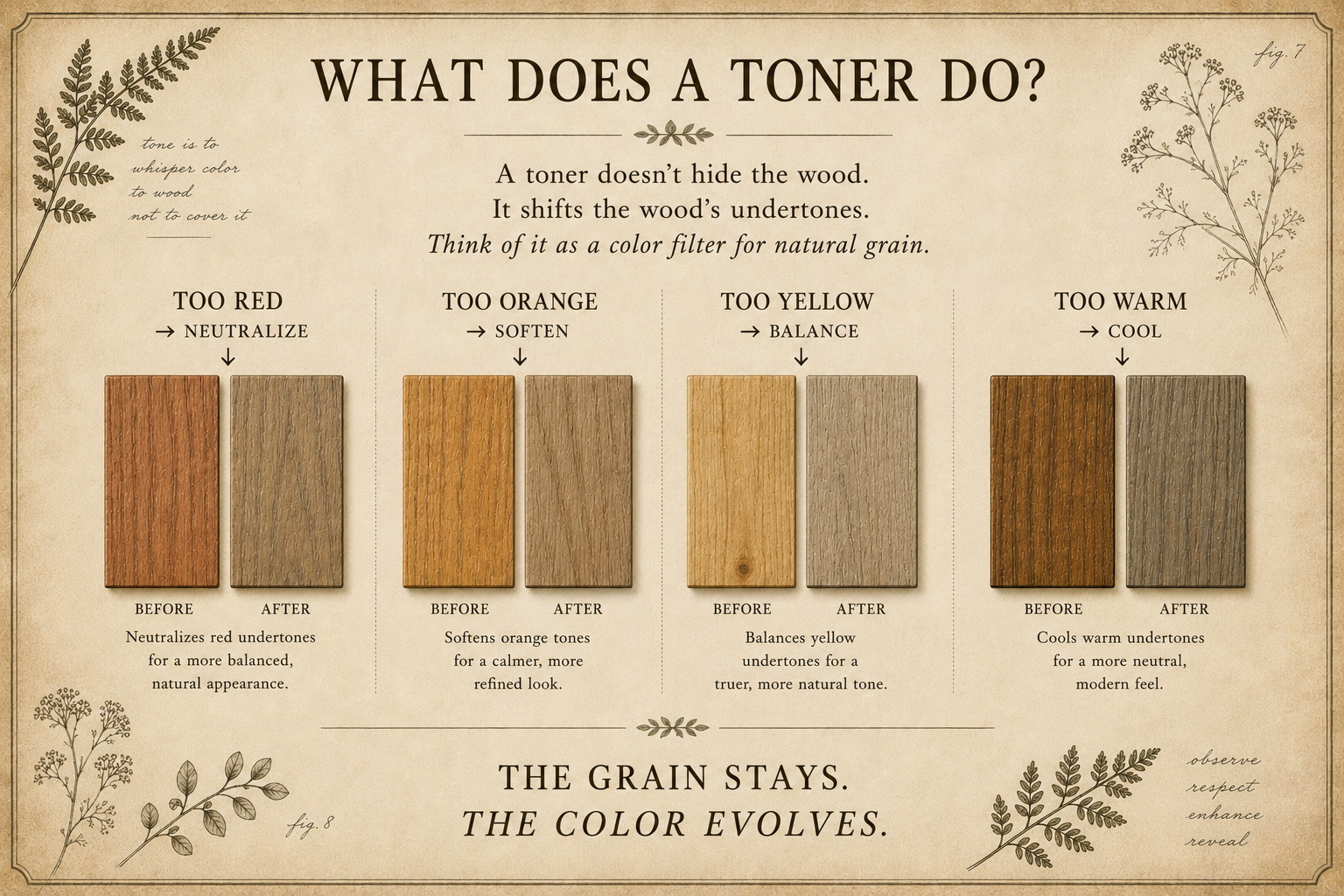
A toner acts like a color filter for wood, subtly adjusting undertones without concealing the grain beneath.
Neutralizing Red Woods with Cocoon
One of the most common challenges in furniture refinishing is excessive redness.
Cherry, mahogany, and red oak frequently contain strong red undertones that can dominate a room.
Many homeowners assume the only solution is to paint these pieces.
In reality, color theory offers a more elegant approach.
Green sits opposite red on the color wheel.
A subtle green influence can neutralize excessive redness without making the wood appear green.
Cocoon
Cocoon is particularly effective for this purpose.
Its mushroom-beige base carries subtle green undertones that gently counterbalance red and orange woods.
Applied as a wash or toner, Cocoon can transform red oak, cherry, mahogany, and warm walnut.
The result feels softer, more sophisticated, and considerably more adaptable to contemporary interiors.
Rather than fighting the wood, Cocoon simply quiets it.
Many furniture artists are surprised by how dramatically a single wash can modernize an otherwise dated wood finish.
Creating Warm Heritage Finishes with Saltmarsh
Not every project requires cooling.
Sometimes the goal is to enhance warmth and create greater depth.
Saltmarsh
Saltmarsh creates a warm, full-bodied finish that enriches wood without overwhelming it.
Its earthy undertones deepen the natural character of the grain while maintaining a sense of authenticity.
Saltmarsh works beautifully when creating heritage-inspired furniture, European farmhouse finishes, cottage interiors, historic reproductions, and collected, layered spaces.
The result feels warm, settled, and timeless.
Creating Natural Driftwood and Stone-Toned Finishes with Burlap
Some projects benefit from restraint.
Rather than making the wood darker or richer, the goal is often to create a quieter, more natural appearance.
Burlap
Burlap introduces dry earth and weathered stone undertones.
When used as a wash, it softens overly warm wood and creates a finish that feels organic and architectural.
Burlap is ideal for driftwood-inspired finishes, coastal interiors, organic modern spaces, Scandinavian-inspired design, and naturalist interiors.
Unlike many gray washes, Burlap retains warmth while still creating a beautifully weathered appearance.
Creating Rich Chocolate Tones with Sable
For projects that require greater depth, Sable provides remarkable richness.
Sable
Sable produces deep chocolate-brown tones while allowing grain variation to remain visible.
The finish often resembles an aged hand-rubbed stain developed through years of use.
Sable works especially well on oak, maple, birch, and pine.
It creates warmth and sophistication without becoming excessively dark.
For many projects, Sable occupies the perfect middle ground between natural wood and espresso finishes.
Creating Espresso Tones with Umbra
When dramatic depth is desired, Umbra becomes a powerful tool.
Umbra
Umbra creates rich espresso and dark walnut effects while preserving the natural beauty of the grain.
Rather than appearing painted, wood toned with Umbra often resembles expensive custom millwork or antique library furniture.
Umbra excels when creating dark walnut finishes, espresso tones, moody interiors, statement furniture, and historic-inspired pieces.
The finish feels substantial, elegant, and timeless.
Creating Near-Black Stain Effects with Blackbriar
For those who love dark wood but find traditional black stain too harsh, Blackbriar offers a compelling alternative.
Blackbriar
Blackbriar is a warm off-black that sits between dark brown and true black.
It creates extraordinary depth while maintaining warmth and complexity.
Where ebony stains can sometimes feel flat or severe, Blackbriar allows the wood to retain character.
The grain remains.
The warmth remains visible.
The wood still feels alive.
Blackbriar creates finishes reminiscent of smoked oak, aged ebony, antique library furniture, darkened timber beams, and historic architectural millwork.
It is particularly beautiful in dark academia interiors, English country homes, moody traditional spaces, and organic modern design.
For furniture artists seeking maximum drama without losing the beauty of the wood itself, Blackbriar often becomes the ideal choice.
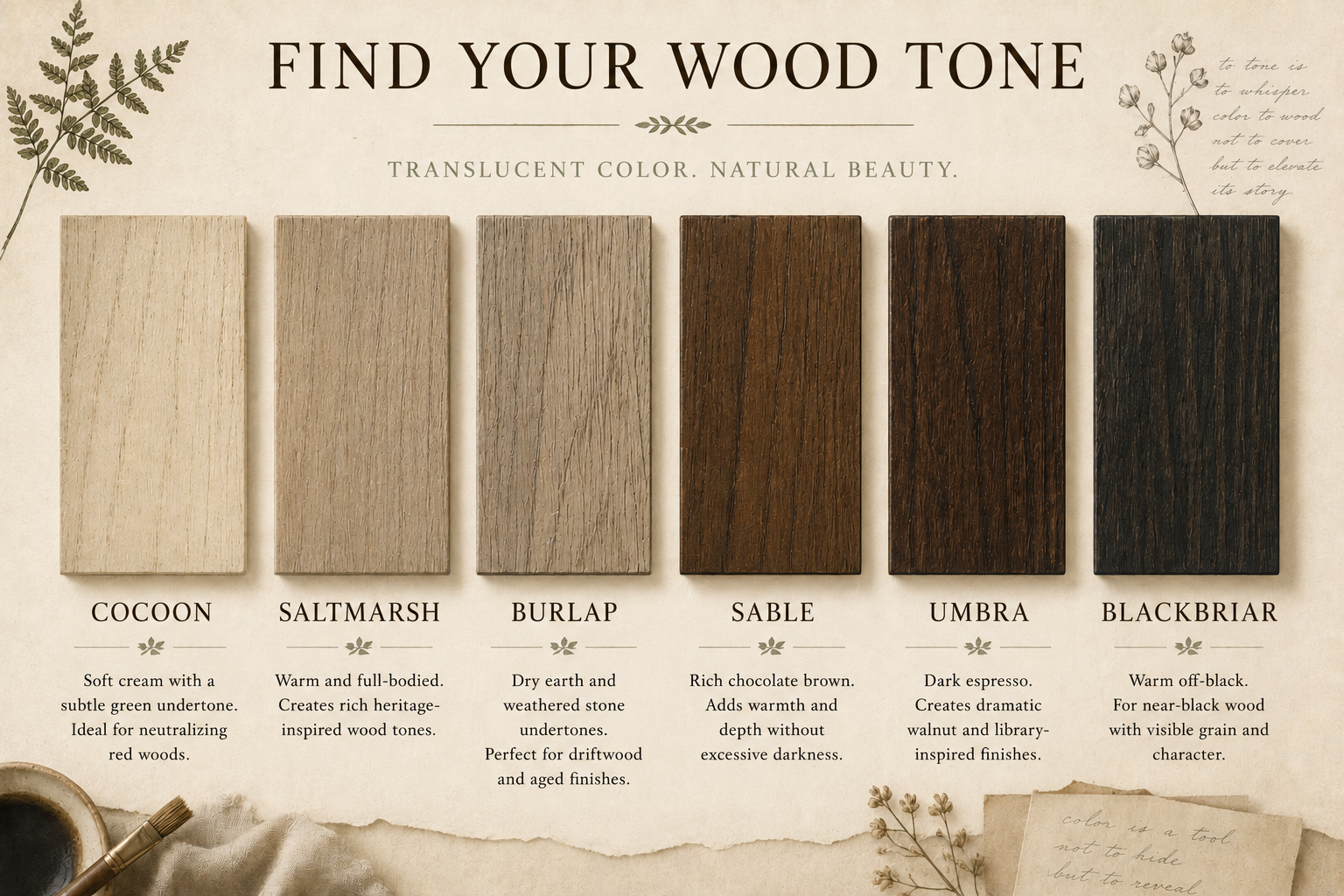
Different colors create dramatically different wood effects, from neutralized oak and weathered driftwood to rich chocolate browns and near-black finishes.
Layering Colors for Custom Wood Finishes
One of the greatest advantages of using paint as stain is the ability to layer colors.
Traditional stains generally offer a single color.
Paint allows you to build depth gradually.
Some beautiful combinations include Cocoon followed by Blackbriar to modernize cherry and mahogany while creating dramatic depth.
Burlap beneath Blackbriar can produce weathered architectural oak with extraordinary character.
Saltmarsh with Sable creates warm, heritage-inspired brown tones.
Cocoon with Umbra can transform red woods into sophisticated dark neutrals.
Burlap with Umbra creates aged walnut and reclaimed timber effects.
These layered finishes often appear more natural than a single stain application because they contain greater complexity and variation.
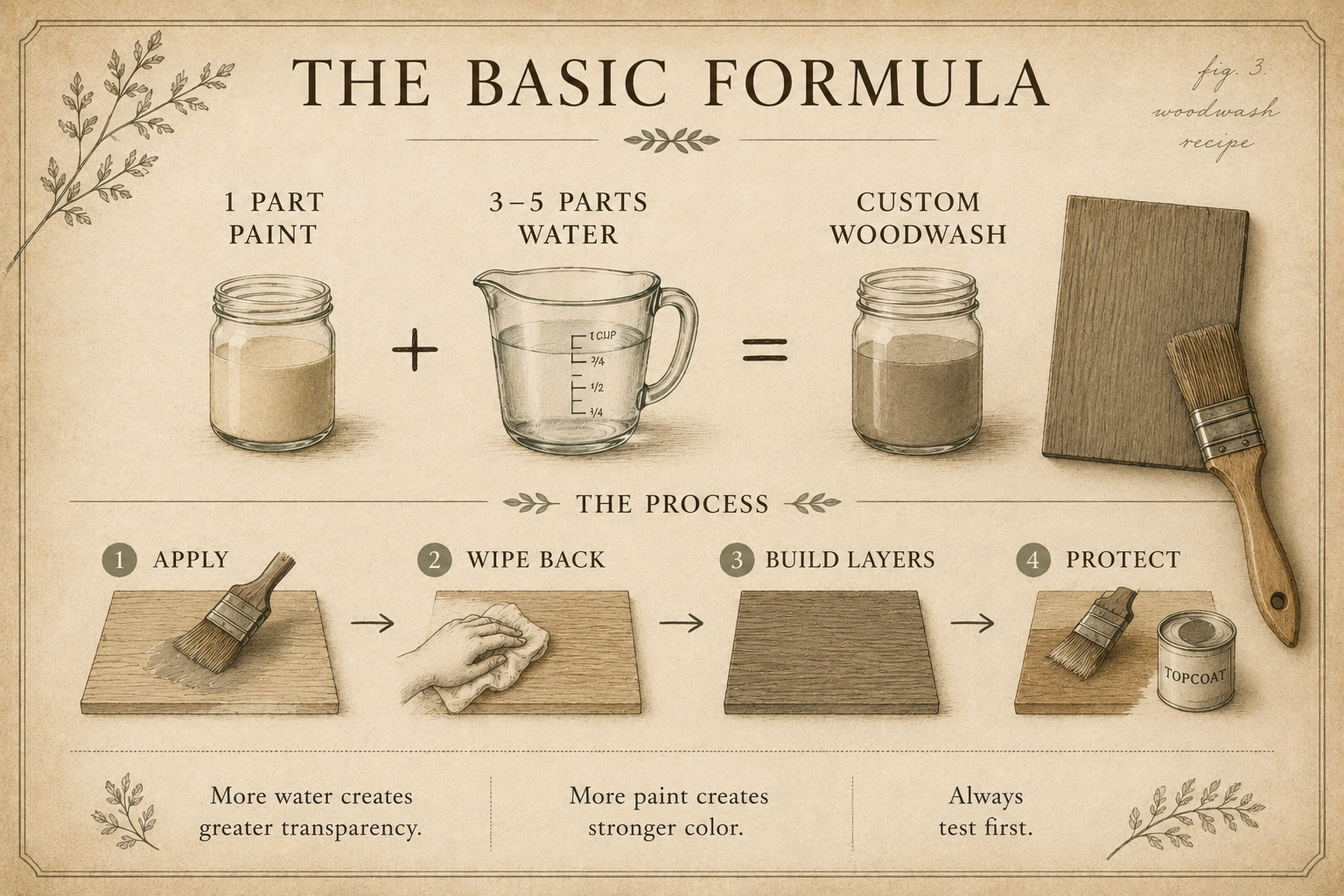
A simple mixture of paint and water can create custom wood stains, washes, and toners with unlimited color possibilities.
Basic Woodwashing Technique
The process itself is surprisingly simple.
First, clean the surface thoroughly and remove any wax, grease, or contaminants.
Lightly sand if necessary. Bare wood generally produces the most predictable results.
Create a wash using approximately one part paint to three to five parts water.
Adjust as needed depending on desired opacity.
Apply the mixture following the grain.
Work in manageable sections.
Wipe away excess using a lint-free cloth.
The more you remove, the lighter the final effect.
Allow the surface to dry completely.
Additional layers may be applied to build depth gradually.
Protect the finish with a suitable topcoat when durability is required.
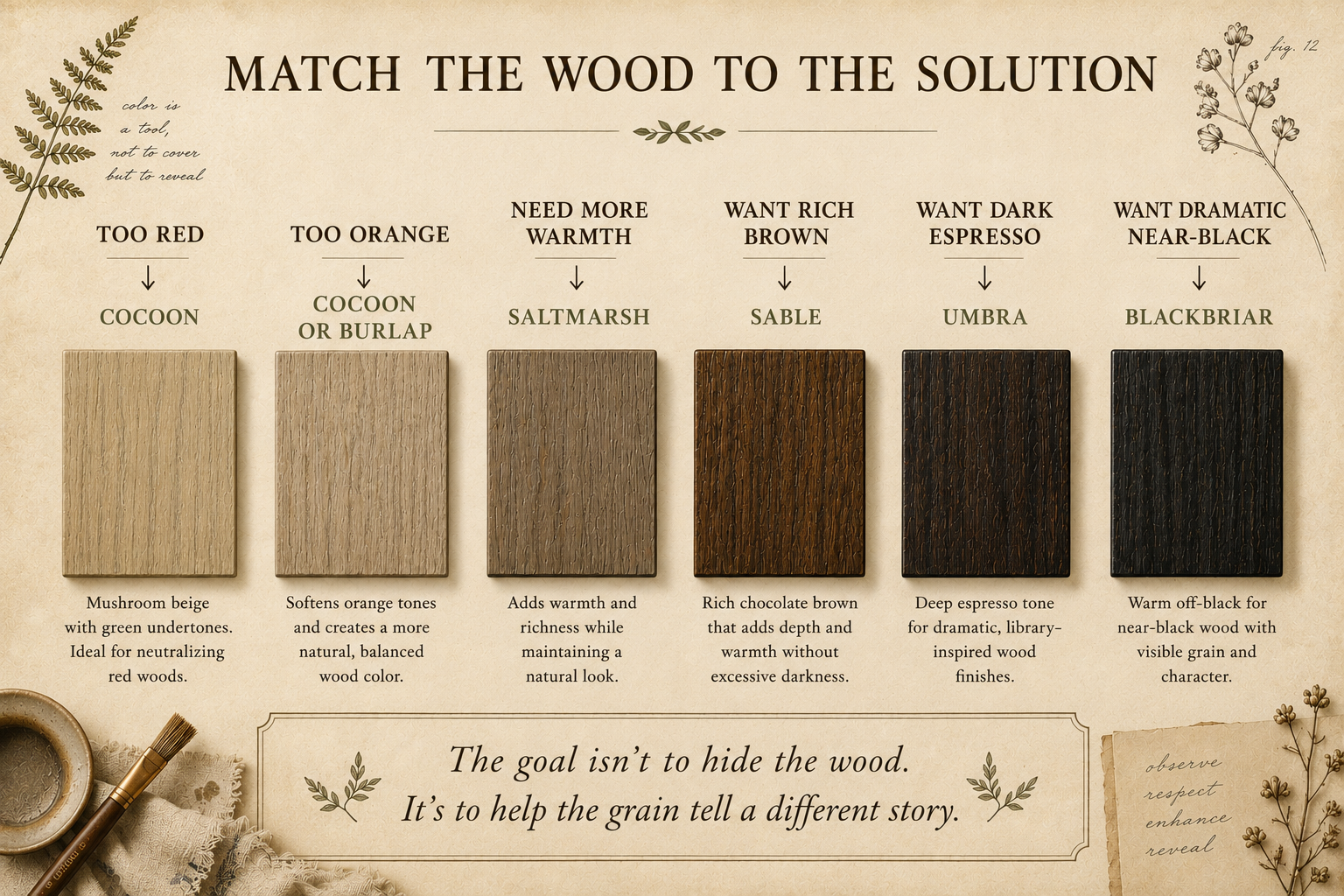
Different wood problems require different solutions. Color theory can help transform wood without completely covering it.
Final Thoughts
Furniture refinishing is often presented as a choice between bare wood and painted wood.
In reality, there is an entire world that exists between those two extremes.
Woodwashing, toning, glazing, and faux staining allow you to preserve the beauty of natural grain while thoughtfully altering its color and character.
Whether you're softening the redness of cherry with Cocoon, enriching oak with Saltmarsh, weathering wood with Burlap, deepening grain with Sable, creating espresso tones with Umbra, or achieving dramatic near-black finishes with Blackbriar, these techniques offer remarkable creative freedom.
Sometimes the most beautiful transformation isn't covering the wood.
It's revealing a different version of it.